
The Invisible Tax on Oil
07.09.2026 | Por Germán Serrano -- 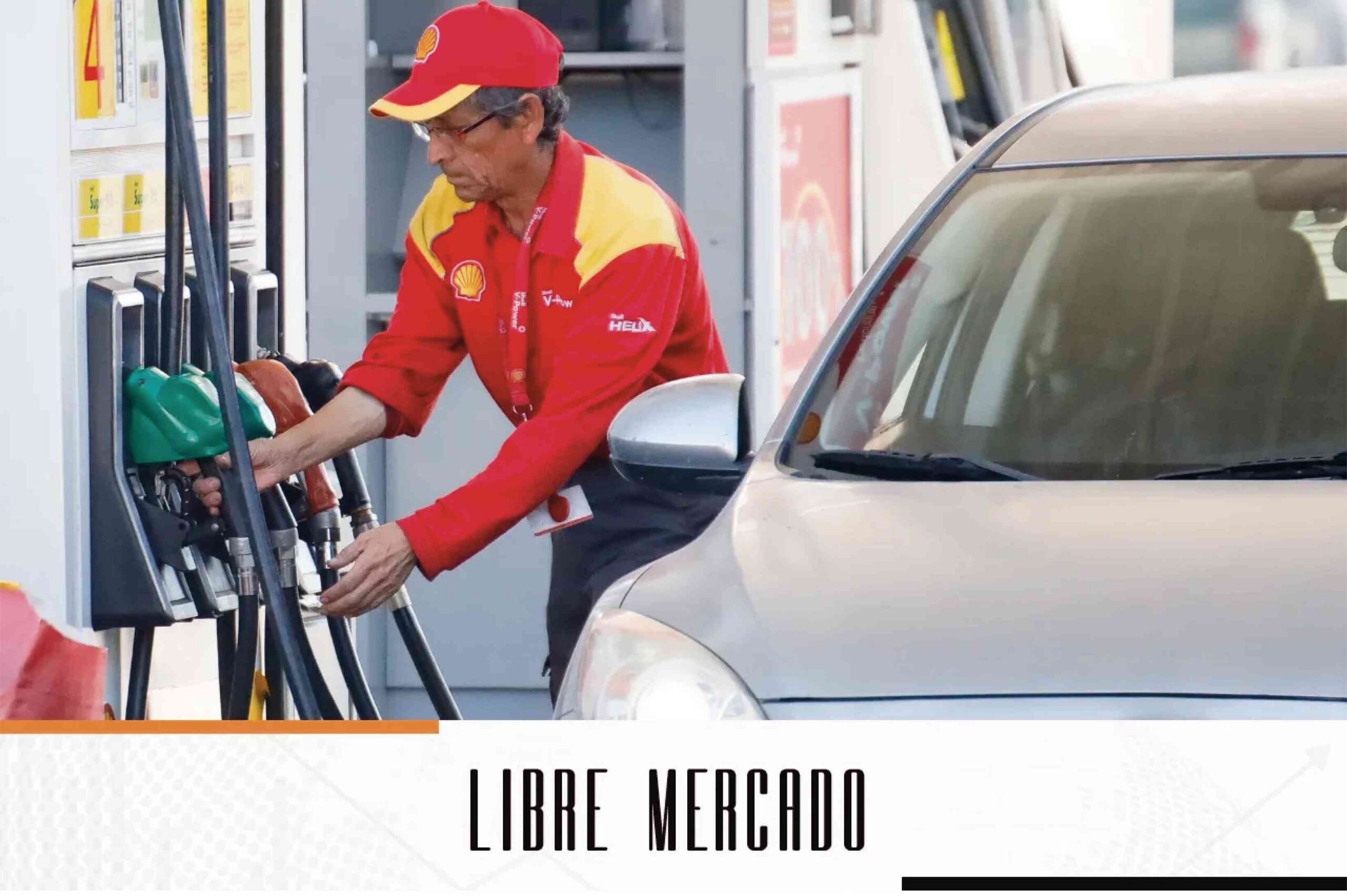
There is no evidence that any government can control the global price of oil. Yet there is evidence—and experience—showing that its fluctuations shape political outcomes. The challenge for governments is not to master that price, but to manage its effects: deciding how much volatility to absorb themselves and how much to pass on to voters, and when.
It is not voted on, it is not legislated, and it has no single author. Yet, every day, it shapes presidential approval ratings.
Oil is arguably the most significant tax in the modern economy. It does not pass through Congress, is not debated during campaigns, and has no directly accountable politician. Yet, it has immediate electoral consequences.
In the United States, the evidence is clear, if far from perfect: periods of sustained gasoline price hikes tend to coincide with significant drops in presidential approval. This happened in the 1970s, recurred in 2008, and was observed again in 2022. The relationship is not mechanical, but it is persistent—and, above all, asymmetric: price hikes are quickly punished, whereas price drops take longer to yield a positive response.
Recent academic research has formalized this. A study by Rangan Gupta, Christian Pierdzioch, and Aviral Tiwari shows that the price of gasoline not only correlates negatively with presidential approval in the United States but actually has predictive power regarding it. This is no coincidence. It reflects the so-called “pocketbook vote”: voters do not evaluate economic theories; they evaluate the cost of living.
This pattern is not unique to the United States. In Chile, although no direct causal link has been proven, recent experience aligns with this logic: when the cost becomes visible, political approval ratings shift. It is not the price itself that triggers the effect, but the moment it becomes apparent. When the pass-through of oil prices to the consumer accelerates—when the buffer is reduced—the impact ceases to be merely technical and becomes political. MEPCO—the mechanism designed to buffer the impact of international price volatility on the price paid by consumers—was created precisely to manage that risk, not to eliminate it.
That is the key point: what matters is not just how much the price of oil rises, but when that rise is felt.
Furthermore, the impact goes beyond energy costs. The FAO food price index rose sharply again—up 2.4% month-on-month in March—driven by higher energy costs. Oil is paid for not only at the gas station but also at the supermarket. And when that happens, the effect is no longer isolated.
That is why the real issue is not whether the price hike is passed on; it is always passed on. The question is rather: who absorbs it, and when? Mechanisms like MEPCO do not eliminate the problem; they manage it.
For this very reason, decisions that significantly adjust these instruments—while painful, they can be economically responsible—require precise timing. After all, the political capital expended will take time to recover.
In the United States, with a crucial election just months away, managing the impact on household finances is not merely a technical decision. If gasoline prices remain under pressure—due to conflicts, supply constraints, or risk premiums—historical patterns and empirical evidence point in the same direction: the cost of living comes to dominate the conversation, and the likelihood of a “punishment vote” grows.
In this context, Donald Trump does not need to control the price of oil. A more limited—and realistic—approach suffices: making the increase less noticeable. Reducing uncertainty, tempering expectations, and offsetting the impact. It is not about control; it is about managing the economic climate.
The logic is simple: if the cost of living stops deteriorating, the backlash loses its intensity.
This is where the tension with “America First” arises. If voters perceive that foreign policy—whether through conflicts, sanctions, or disruptions—ends up driving up their cost of living, that promise loses its credibility. Not for ideological reasons, but for something more fundamental: the pocketbook.
There is no evidence that a government can control the global price of oil. Yet there is evidence—and experience—showing that its fluctuations shape political outcomes. The challenge for governments is not to control that price, but to manage its effects: deciding how much volatility to absorb themselves and how much to pass on to the voter, and when.
See source